


Taking action: Preventing drug abuse and crime through sport and education in the Philippines
A pioneering initiative in the Philippines is combining sport, education and safeguarding to help prevent children and young people from becoming involved in drugs and crime. The programme from the charity ACTION forms part of the Sport and Youth Crime Prevention (SYCP) Initiative which uses sport to build safer and more resilient communities across Southeast Asia.
The SYCP Initiative, which was initiated by the International Olympic Committee and Agence française de développement (AFD), has allocated more than EUR 1 million to organisations in the Philippines, Thailand, Vietnam and Lao PDR to support community-based projects focused on youth crime prevention and social inclusion through sport.
Within this framework, ACTION has developed an innovative drug abuse prevention programme aimed at equipping children with the knowledge and confidence to resist exploitation, peer pressure and involvement in the drug trade. The organisation works closely with children, and the families of children, in conflict with the law, as well as young survivors of abuse and neglect.
EXPLOITED
Lani Bayron-Llanes, Executive Director for ACTION, explained: “Our drug abuse prevention campaign started because we were deeply concerned about children being involved in drug-related crimes. Many children are exploited because syndicates know they are minors. Some are even introduced to drugs by adults within their own families.”
To strengthen its work, ACTION partnered with the Philippine Drug Enforcement Agency (PDEA). A rigorous accreditation process saw ACTION staff become certified to deliver preventive drug education in communities, and while PDEA provided technical support and training, ACTION helped to create and deliver innovative sessions for children and teenagers.
“PDEA openly acknowledged that their materials were intended for adults,” said Llanes. “They encouraged us to innovate and make the training child-friendly because they themselves admitted they were not yet prepared to discuss these issues with younger children.”
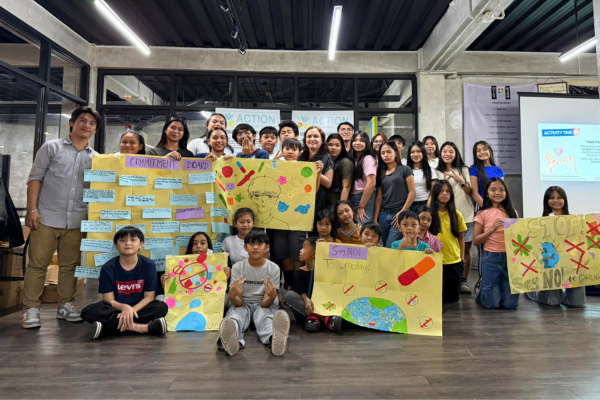
The result is a programme that delivers serious safeguarding messages in a supportive and engaging environment. Sessions include games, drawings, group discussions, film screenings, and interactive exercises designed to help children understand the risks of drugs without creating fear or trauma.
“We didn’t want children going home frightened or traumatised,” Llanes explained. “We wanted them to understand the issue in a way that was honest, practical, and appropriate for their age.”
A major focus of the programme is helping children recognise and resist peer pressure. Alongside information about drugs and addiction, participants learn how to say ‘no’, identify unsafe situations, and seek help from trusted adults such as teachers, guidance counsellors, social workers, caregivers and ACTION staff.
TEAMWORK
According to ACTION staff, sport also plays a vital role in the initiative. Through the ‘Beyond the Game’ project supported as part of the SYCP Initiative, young people participate in structured sporting activities that create safe spaces, encourage teamwork, and build self-confidence. Organisers believe sport provides a positive alternative to harmful influences while strengthening relationships within communities.
The programme also extends to parents and guardians, who will receive dedicated training sessions to help them support and protect children at home.
Although the initiative is still in its early stages, ACTION is already monitoring learning outcomes through pre- and post-session assessments. However, Llanes believes the real impact will only become visible over time.

“The long-term goal is simple,” she said. “We want children to grow into healthy, contributing members of society instead of becoming trapped in crime, addiction or exploitation.”
For ACTION, the work is about much more than statistics and local government policy objectives, it is about each and every young person and their future. “We care about the economic impact,” Llanes added, “but more importantly, we care about the children themselves as individuals.”
The partnership between ACTION and the SYCP Initiative demonstrates how governments, civil society organisations, and international partners can work together to prevent youth crime through early intervention, education and the power of sport.
Read more about the Southeast Asia Sport and Youth Crime Prevention (SYCP) Initiative.