
From displacement to belonging: How sport is building peace on the Thailand-Myanmar border
The critical role that sport can play in creating “social ties and connections” which can lead to peace and conflict resolution was showcased in the latest Sport and Youth Crime Prevention (SYCP) webinar.
In the build-up to the International Day of Peace on September 21, the webinar ‘Sport, Migration, Displacement and Youth Crime Prevention: Building Resilience, Belonging and Peace through Sport’ saw more than 70 policy-makers and practitioners from around the world meet online to hear about the impactful work of international NGO PlayOnside supporting migrant and displaced young people on the Thailand-Myanmar border.
The webinar included stirring testimonies from young leaders with lived experience of these issues who work for the Playbook Foundation that delivers the programme in Tok province.
CONNECTIONS
Opening the webinar Nicolas Tateossian, Agence Française de développement’s Deputy Director for Thailand, set the context, stating: “When we bring sport, we bring social ties and connections.
“Conflicts start when people don’t know each other, and one big advantage of sport is to create connection. Sport is not the magic solution, but when you start creating connection, you contribute to build a peace for the future. Historically, sport has always played an important role in integrating migrant populations in France.”
Initiated by AFD and the International Olympic Committee (IOC), the Southeast Asia SYCP Initiative is being delivered in collaboration with a wide network of national, regional and international organisations in Thailand, Lao PDR, the Philippines and Vietnam. The implementation of the programme is being supported by a consortium co-ordinated by the Alliance of Sport in Criminal Justice.
Drawing on France’s own history of migration, Nicolas also reflected on how sporting offers embedded in communities have helped generations of newcomers build relationships, integrate into communities and find a sense of belonging.
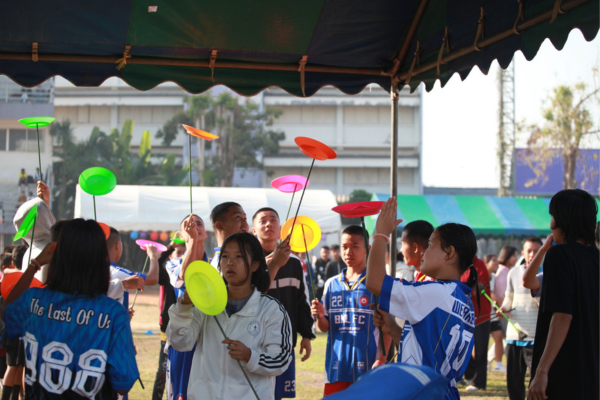
“In very fragile contexts, we invest in sport as much as we invest in infrastructure,” he explained.
“Though we have to be honest, of course: sport is not a magic recipe for everything. It’s not a miracle, and it will never cancel displacement.”
Ole Gunnar Michelsen, Programme Director for PlayOnSide Cambodia, described how his organisation works with migrant and displaced communities along the Thailand-Myanmar border through its local partner, Playbook Foundation Thailand.
Together they support thousands of children through football-based education, emotional resilience programmes, gender equality initiatives and community activities. The philosophy is simple: every child deserves an equal opportunity to play, regardless of legal status, ethnicity or background.
WELLBEING
Crucially, Ole emphasised that PlayOnSide is “not a football academy”. Instead, football provides the vehicle for teaching communication, teamwork, confidence and emotional wellbeing.
Rather than focusing on producing elite players, it develops local coaches and youth leaders, ensuring programmes remain rooted in the communities they serve.
Perhaps the most powerful moment came from Thet Htar, a 21-year-old youth leader from Karen State, Myanmar, whose personal journey embodied the webinar’s central message.
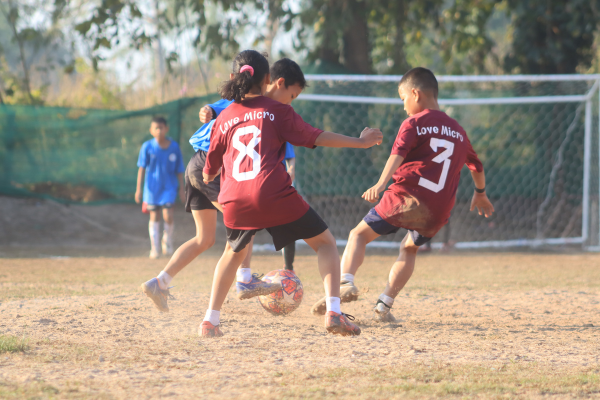
She first encountered football at the age of 13 when PlayOnSide visited her village. Before then, she had never played because football was considered “a boys’ game”.
Everything changed after Myanmar’s 2021 military coup.
Forced to flee her home, what should have been a five-hour journey to Thailand became a four-day escape. Arriving in Mae Sot, aged 16, with little money, limited language skills and uncertainty about her future, she found connection through PlayOnSide’s programmes.
Today, as Youth Leader and Intern for the Playbook Foundation, she helps to deliver projects covering sexual and reproductive health education, women’s leadership, emotional resilience and disability inclusion.
“My dream,” she explained, “is to return to my village and bring football and play-based learning to children growing up there.
OPPORTUNITY
“I want to give children the same kind of opportunity that I had when I was 13 years old, and I also want to be a role model for young people in my community.”
Fellow Playbook Foundation leader Laura Htway explained how the project intentionally removes barriers that prevent participation.
Girls are actively encouraged to form football teams, transport is provided so schools can attend weekend tournaments, and football sessions are designed for beginners, ensuring that young people do not need confidence or sporting ability before taking part.
More importantly, every match becomes an opportunity for learning.
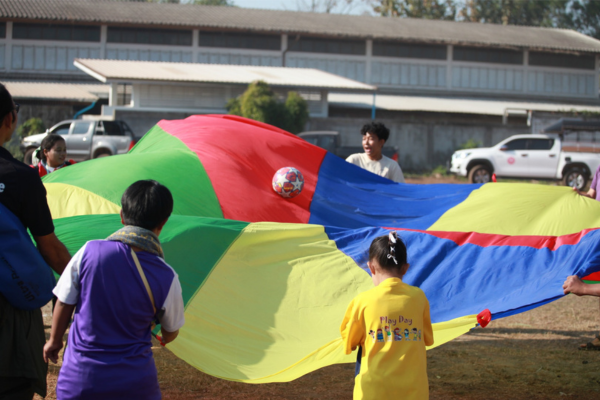
After games, participants reflect on emotions, disappointment, conflict resolution and respect, turning competition into conversations about resilience and relationships.
Laura explained: “Through my experience, I have learned that sport is not only about physical ability. It can be a powerful tool for creating a safe space, building confidence, developing relationships and helping young people feel that they belong.
“Most importantly, I have come to understand that sports should be accessible to everyone, regardless of gender, background, ability or previous experience.”
The webinar reinforced a growing international understanding that preventing youth crime requires more than enforcement alone. It requires safe spaces, trusted relationships, positive role models and opportunities for young people to belong.
Across the Thailand-Myanmar border, where millions have experienced displacement and uncertainty, those opportunities can begin with something as simple as kicking a football together.
Read more about the Southeast Asia Sport and Youth Crime Prevention (SYCP) Initiative.