


Strengthening youth crime prevention through safeguarding and gender equality in Lao PDR
In Lao PDR, a growing movement is demonstrating that preventing youth crime is about far more than law enforcement alone. Through safeguarding, gender equality education, and community trust-building, the Gender Development Association (GDA) is helping create safer environments for children and young people as part of the Southeast Asia Sport and Youth Crime Prevention (SYCP) Initiative.
Initiated by the International Olympic Committee (IOC) and Agence française de développement (AFD), the SYCP Initiative invests in projects across Southeast Asia that use sport and community engagement to prevent youth crime and strengthen social inclusion. While sport remains an important tool for engagement, organisations such as GDA are also addressing the deeper social and cultural factors that place young people at risk.
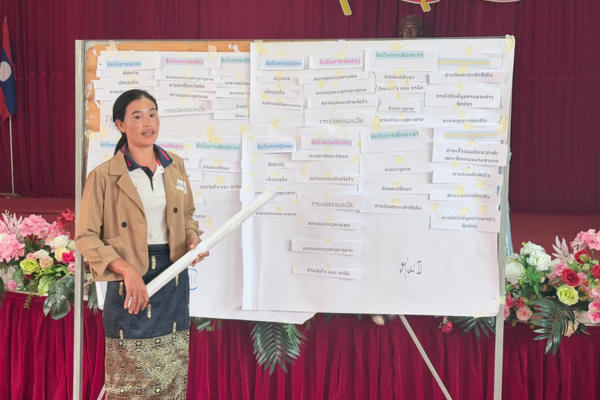
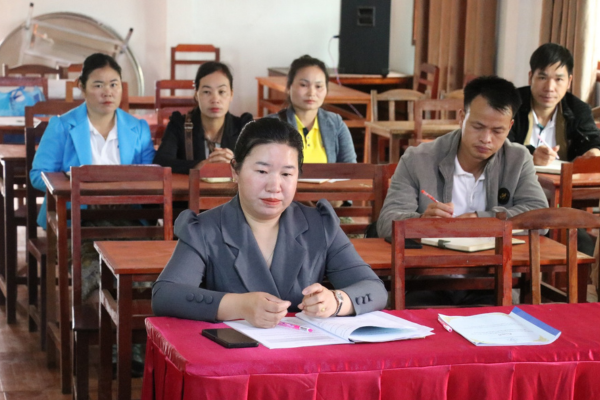
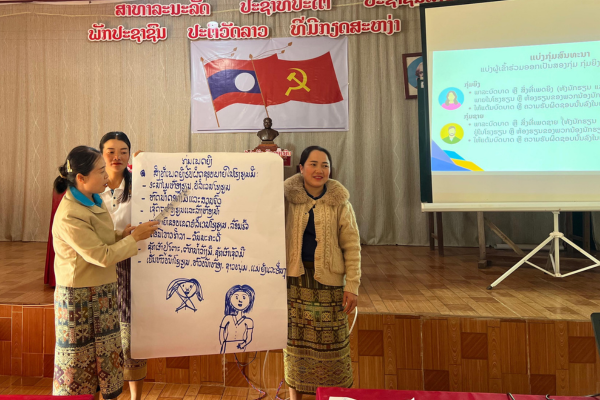
Training for staff in safeguarding and gender equality (pictured here) is central to that work. GDA project manager Salackchith Sunthorn explained: “The training mainly focuses on gender equality, violence against children, and safeguarding. Even though we are not a sport-focused organisation, safeguarding is still very important because it is about preventing harm and protecting children and youth within our programmes.”

Working in Lao PDR, particularly in rural and mountainous regions with high poverty levels and limited access to youth services, GDA faces complex challenges. Many communities remain socially conservative, especially within minority ethnic groups where traditional gender roles can leave women and girls vulnerable to inequality and violence.
“In Lao PDR, gender equality is still a major issue,” said Salackchith. “In some communities, women are still under men’s power, and people are often afraid to speak out about abuse or violence.”
To respond to these challenges, GDA recently strengthened its safeguarding procedures by revising its policies and introducing clearer reporting systems for children and young people. One of the most significant innovations has been the introduction of anonymous reporting channels using QR codes, allowing children or community members to safely report concerns without revealing their identity.
“Traditionally, people in Lao PDR are conservative,” Salackchith explained. “Many do not want to report sensitive issues if their identity will be known. That is why anonymous reporting is so important.”
The revised safeguarding system also includes designated staff, clearer reporting pathways, and stronger guidance for schools and programme partners. Before activities begin, all partners are required to acknowledge GDA’s safeguarding policies and sign a code of conduct outlining their responsibilities when working with children and youth.
According to GDA, these improvements are part of an ongoing learning process shaped by practical experience in communities.
“Every time we revisit the process, we improve it,” said Salackchith. “Now we have better prevention measures, clearer channels, and more opportunities for children and youth to report concerns safely.”
Importantly, GDA believes civil society organisations can play a unique role in youth crime prevention because communities often feel more comfortable speaking to local organisations than to government and authorities.
“People trust us because we work directly with communities,” Salackchith explained. “That means we often have data and information that governments do not receive directly.”
Through the SYCP Initiative, GDA is also integrating sport into its prevention work. In many rural schools, children have little access to recreational opportunities or sports equipment. By providing equipment and encouraging participation in organised activities, the programme creates positive spaces for young people to connect, build confidence and avoid harmful situations.
Salackchith stated: “In many villages, children only play basic games or football with very limited equipment. Sport gives them another opportunity. It creates enjoyment, connection and positive activity that can help prevent violence and youth crime.”
For GDA, sport also offers a more engaging and accessible approach than traditional awareness campaigns alone.
“Many programmes approach youth crime prevention in a very academic way,” Salackchith added. “What is different about SYCP is that sport makes the learning practical and enjoyable. Young people want to participate, and that creates space for important conversations.”
As the SYCP Initiative continues across Southeast Asia, GDA hopes its safeguarding and gender equality experience can contribute to wider learning across the network of partners. By combining sport, prevention, safeguarding and community trust, the organisation believes lasting change is possible – particularly for vulnerable children and young people who are too often unheard.
Read more about the Southeast Asia Sport and Youth Crime Prevention (SYCP) Initiative.