

APPG AGM: ‘Universal offers’ required to maximise benefits of physical activity and sport in prisons
“Pockets of good practice” must become “universal offers” and structural reforms if physical activity and sport are to achieve their full potential in helping people in prison and on probation rehabilitate and resettle successfully.
That was the central message at the Annual General Meeting of the All-Party Parliamentary Group (APPG) on Sport and Physical Activity in the Criminal Justice System. The meeting, which was well supported by Parliamentarians, followed two recent publications: HM Chief Inspector of Prisons Charlie Taylor’s report, Hardly Working Out: Barriers to Physical Education in Prisons, and the APPG’s own Inquiry Report.
Participants shared examples of effective programmes across the youth and adult secure estates in England and Wales. However, they agreed that these successes remain too isolated. Inconsistent provision often undermines progress, contributes to reoffending, and wastes public money. Many attendees pointed to poor facilities, inadequate equipment, and a lack of continuity in support and relationships.
RECURRING
A recurring theme was that sport and physical activity are still treated as a “nice to have” rather than a “must have” in efforts to reduce reoffending. This remains the case despite evidence that repeat offenders commit the majority of crimes in England and Wales and despite growing concern over stubbornly high reoffending rates.
Baroness Sater, co-chair of the APPG, opened the meeting by reminding attendees that “sport and physical activity is a vital tool for rehabilitation and wellbeing, and for building safer, healthier and more resilient communities”.
Reflecting on the APPG Inquiry Report, she commented: “Our recent report highlighted key themes that must guide us: culture, collaboration, innovation, data and lived experience. These are not abstract ideas; they are the building blocks of real change, and our role as an APPG is to make sure that those building blocks are put into practice, shaping policy around practice and decision-making. So as we look to the year ahead, I hope we can renew our commitment to making sport and physical activity a must have, not a nice to have.”
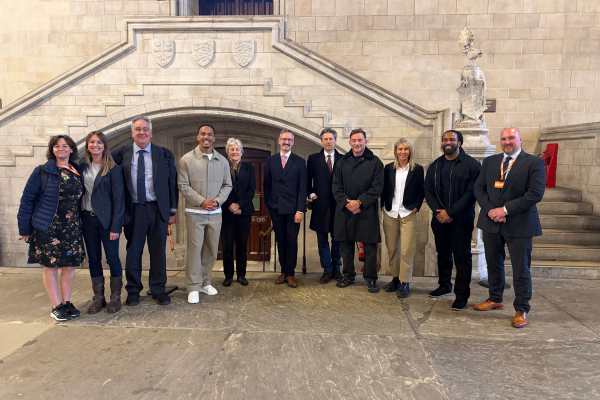
HM Chief Inspector of Prisons Charlie Taylor described several obstacles facing prisons, including overcrowding, delays in staff vetting, and the increasing use of drones to smuggle drugs into prisons. These pressures, he said, create “strong headwinds” against reform. Yet he also noted that some prisons are already transforming lives through innovative approaches and said the challenge is to spread that success more consistently across the system.
Researcher Alicia Grassom summarised findings from the inspectorate’s report, which analysed 38 prison inspections and more than 6,000 prisoner surveys collected between April 2024 and March 2025. She explained that higher levels of physical activity were strongly linked to improved behaviour. Prisoners reported that when they had regular gym access, violence declined, drug use decreased, and boredom-related incidents became less common.
Those who exercised or played sport five times or more per week were also less likely to have been restrained or placed in segregation during the previous six months. Grassom said physical activity also created informal opportunities for staff and prisoners to build stronger relationships. In some prisons, PE teams had developed partnerships with local sports organisations that offered accredited training and qualifications.
PRESSURES
Despite these benefits, Grassom warned that too few prisoners currently have access. Many successful programmes serve only a small number of people and remain exceptions rather than standard practice. Operational pressures often prevent PE departments from delivering consistent opportunities, even where staff are committed.
James Mapstone, Chief Executive of the Alliance of Sport in Criminal Justice, outlined the APPG’s Inquiry Report and its seven recommendations. The first calls for stronger accountability among prison governors and senior leaders to recognise the role of sport in improving behaviour, engagement, and progression. Where leaders fail to prioritise it, he said, opportunities for rehabilitation are lost.
Dr Simon Marshall, Chair of HM Prison and Probation Service, said the key question is how to create more universal provision. At present, he noted, many programmes depend on isolated partnerships driven by individual passion rather than system-wide planning. While inspiring, these examples are not yet available everywhere.
INITIATIVES
Several attendees discussed whether football clubs could play a greater role in rehabilitation and resettlement, particularly as community engagement becomes a stronger expectation in professional sport. Other models were also highlighted, including parkrun programmes already operating in prisons and functional fitness initiatives.
Lindsey Middleton of The 180 Project said the fitness sector is increasingly well placed to support people leaving prison, particularly young men. She argued that structured training can provide focus, identity, and a positive alternative to risk-taking behaviour.
The meeting ended with a powerful speech from Isiah James, founder of Freedom Through Fitness, who described how physical activity changed his life after time in prison. Fitness, he said, became more than exercise. It gave him discipline, accountability, confidence, and resilience – the foundations he needed to rebuild his life.
The APPG will now consider next steps, including the possible creation of a taskforce to help turn its recommendations into lasting reform across the criminal justice system.
Read the APPG Inquiry Report: Physical Activity and Sport across the Children and Young People Secure Estate, and Custodial Estate in England and Wales.
Read HM Chief Inspector’s Report: Hardly Working Out: Barriers to Physical Education in Prisons.