


World Urban Forum told: Put sport and youth crime prevention at the heart of city planning
The contribution of sport to building safer, more sustainable communities – and in particular its role in youth crime prevention – was highlighted at the World Urban Forum in Baku, Azerbaijan.
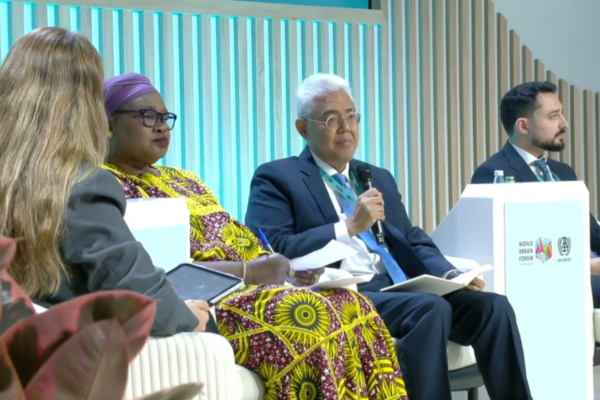
The special session, Cities as Playing Fields, brought together international leaders, urban planners, Olympic representatives and development banks to examine how sport can be integrated into urban development policy and financing.
Organised under the framework of UN-Habitat, the session described sport as “an essential urban service” that supports healthier, more resilient communities. Speakers argued that sport should be recognised alongside housing, transport and public infrastructure as a core component of sustainable urban development.
URGENT
A key contributor at the session was Vongthep Arthakaivalvatee, senior advisor to the Alliance of Sport in Criminal Justice, which is co-ordinating the delivery of the Southeast Asia Sport and Youth Crime Prevention (SYCP) Initiative. The initiative was created by the International Olympic Committee (IOC) and Agence française de développement (AFD).
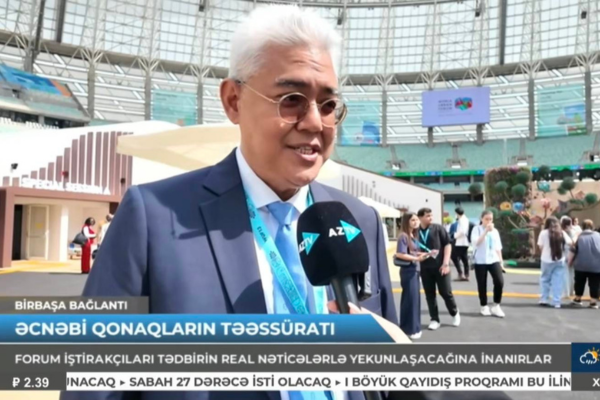
Mr Arthakaivalvatee (pictured below) stressed the urgent need to place sport at the centre of urban policy discussions.
“I cannot emphasise enough the role of sport,” he told AzTV national news after the session (watch from 5mins 20secs). “This is about how we use sport to engage young people, so as to prevent them from being involved in crime and violence.”
The SYCP Initiative demonstrates how sport can help reduce youth violence, strengthen social cohesion and create opportunities for vulnerable communities through collaboration between governments, schools, sports organisations and justice institutions.
At the session (which can be viewed here) opening remarks from UN-Habitat executive director Anacláudia Rossbach and Laura Chinchilla, IOC Member and the former President of Costa Rica, reinforced the message that sport must no longer be viewed as optional programming, but as a practical tool for building resilient urban societies.
During the discussion, Mr Arthakaivalvatee was asked what cities that fail to invest in sport for young people might look like in 10 years’ time in terms of crime rates, healthcare costs and economic participation.
“My quick and easy answer to your question is: the picture is not going to be good,” he said.
PREVENTION
“If you think about 10 years from now, you’re going to see increases in crime rates, higher costs in healthcare systems, and criminal justice systems bearing huge costs. All of this can be addressed through investment in prevention.”
He argued that investment in sport should be viewed as investment in long-term social stability and economic productivity, particularly for vulnerable young people living in disadvantaged urban communities.
“When you’re talking about 10 years from now, you’re talking about the future,” he said. “And whose future are we talking about? It’s the young generation.”
He warned that young people growing up in poor urban environments, particularly those out of school or socially excluded, face far greater risks of crime, victimisation and trafficking.
“We have to ask ourselves what we can do to engage them,” he said. “Through sport, this has been proven to be a low-cost, highly effective, high-impact tool for governments and cities to utilise in crime prevention.”
Mr Arthakaivalvatee also linked sport to wider public health and development outcomes, pointing to growing concerns around physical inactivity among young people.
WARNING
“Eighty per cent of adolescents, or one in three adults, are insufficiently physically active,” he said, citing World Health Organisation (WHO) data. “That should be a warning to all of us.”
He added that sport and urban development “cannot be seen in isolation”, arguing that prevention strategies must cut across housing, health, education and youth policy.
“We need to invest in prevention,” he said. “Not only to prevent youth crime, but also to address future health crises, reduce long-term costs and strengthen future economic productivity. That is the way forward.”