

PlayOnside: Supporting gender equality in migrant and refugee communities along the Thai-Myanmar border
To mark International Women’s Day on 8 March 2026, the Southeast Asia Sport and Youth Crime Prevention (SYCP) Initiative is highlighting some of the grassroots programmes that it is supporting, which specifically advance gender equality through sport. In this article, we hear about ‘PlayOnside’ from Naw Laura Htway, Programme Director PlayBook Foundation Thailand and Ole G. Michelsen, Country Director PlayOnside Norway.
For more than a decade, PlayOnside has worked within migrant and refugee communities along the Thai–Myanmar border, using sport as a tool for inclusion, empowerment, and gender equality. From the very beginning in 2013, one of PlayOnside’s main objectives has been to question and change social norms around who football is for. Since then, the programme has reached thousands of children and youth through regular sessions and local tournaments in Mae Sot and surrounding communities.
EXPECTATIONS
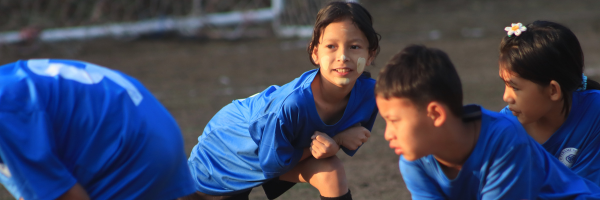
When PlayOnside began its work in Mae Sot, a small Thai border town along the Moei River separating the two countries, football was widely seen as a boys’ game. Girls’ participation was often discouraged by social expectations, safety concerns, and a lack of visible female role models. Today, that reality looks very different. What was once perceived as a space reserved for boys has become a space for everyone, where girls and boys have equal opportunities to play, learn, and lead together.
The change is not only visible in participation numbers, but also reflected in attitudes and lived experiences. As one Women Lead participant explained: “Women Lead training creates the opportunity for women and girls to play football. I learned to stay healthy and improved my communication skills through this training.”
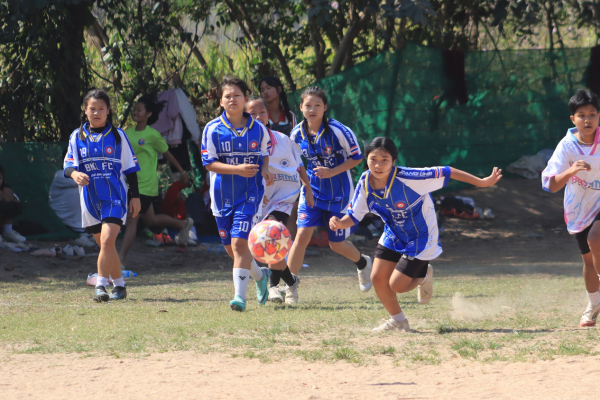
Where girls’ teams once received little encouragement, they are now met with the same support and celebration as boys’ teams. This shift is deeply meaningful for participants. One player shared: “I am happy to have many friends who play football. Normally, women in our society are expected to stay at home and do house chores rather than play sport. The Women Lead training creates a safe space, reduces stress, and builds fun activities.”
A key driver of this transformation has been PlayOnside’s deliberate focus on female role models, mentors, and leaders. For young migrant girls growing up in displacement-affected communities, seeing women on the football field matters. Coaches who look like them, speak their language, and share similar life experiences help make participation feel possible, safe, and encouraged.
CONFIDENT
This sense of safety and belonging is repeatedly emphasised by participants: “I feel safe, relaxed, and I have fun. Women are often discouraged from participating in sports, so having a safe space like Women Lead training makes it possible to feel confident and empowered to play.”
PlayOnside does not view girls only as participants, but as future leaders and changemakers. By creating clear pathways for girls to move from players to facilitators, mentors, and paid staff members, PlayOnside aims to generate real and systemic change through sport.
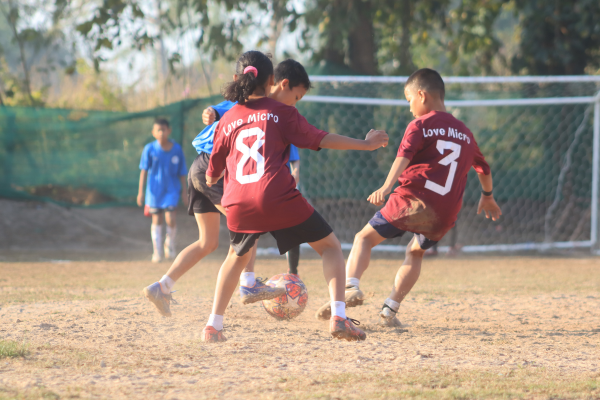
Today, PlayOnside is proud to say that half of its coaches and role models are women, all of whom began their journey as participants. This progression from player to leader demonstrates that gender equality in sport can be structural rather than symbolic when implemented through a long-term, community-rooted approach.
Beyond participation and leadership, PlayOnside integrates life skills and rights-based education into its football programmes. Two current focus areas are Sexual and Reproductive Health and Rights (SRHR) and emotional resilience, both critical gaps within the migrant education system.
TEAMWORK
Participants highlight that this learning component is as important as sport itself: “I feel relaxed when I join the Women Lead training. I don’t only learn basic football skills, but also life skills such as networking, teamwork, and respect among players.”
Another participant shared: “This training is suitable for women who have children because the activities are designed for both mothers and kids. I have boosted my confidence, met new people, and made many friends.”
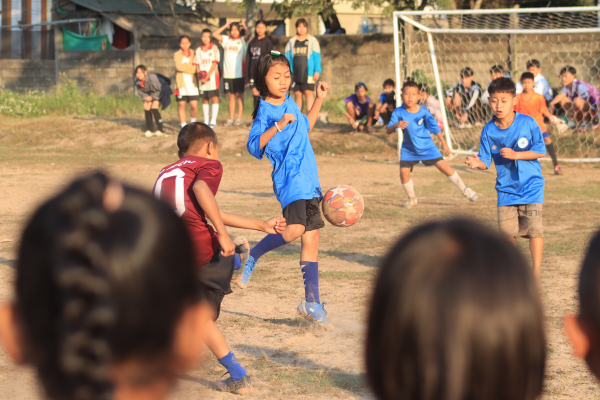
This integrated approach reflects a broader understanding: in development work, there is no one-size-fits-all solution. In some contexts, football sessions may address SRHR or emotional wellbeing, while in others they may focus on WASH, HIV awareness, environmental responsibility, or other locally relevant challenges. The common thread is that sport, especially team sport, is a highly effective educational tool in low-resource environments.
On International Women’s Day, PlayOnside recognises that gender equality in sport is not achieved overnight. It is built through long-term presence, consistent norm-challenging, investment in local leadership, and pathways that allow girls not only to participate, but to shape the spaces they are part of.
COMMITTED
Along the Thai–Myanmar border, football has become more than a game. It has become a platform for equality, learning and lasting change.
The journey that started 13 years ago is far from finished. PlayOnside remains committed to continuing its work for gender equality, ensuring that sport remains a space where girls and young women can participate, lead, and thrive.
Happy International Women’s Day.
Read more about the Southeast Asia Sport and Youth Crime Prevention (SYCP) Initiative.